
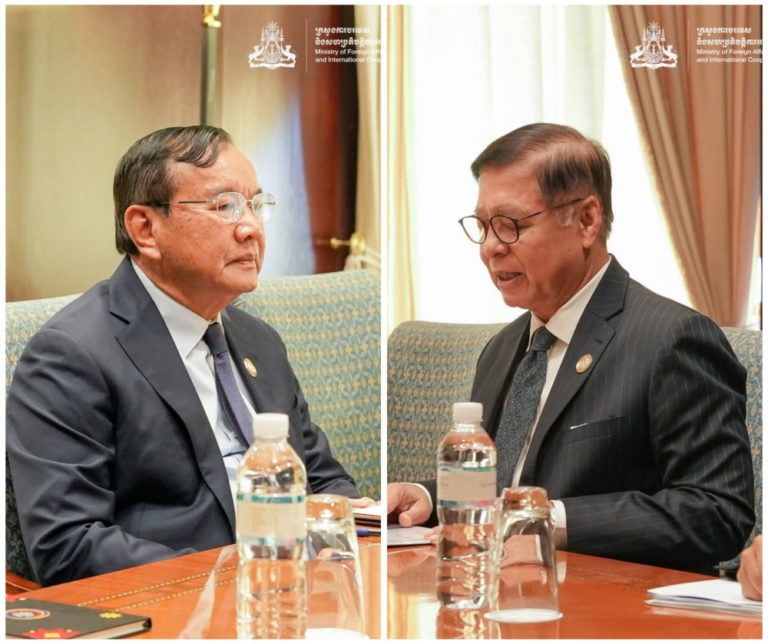
Cambodia’s Deputy Prime Minister and Minister of Foreign Affairs and International Cooperation, H.E. Prak Sokhonn, has stated that Cambodia would cease raising concerns over border violations if Thai military forces stop its illegal activities along the common border.
The Cambodian top diplomat made the remarks in response to a report by Thai media outlet The Nation, which suggested that a ceasefire should go hand in hand with the cessation of statements that do not contribute to a positive atmosphere for restoring relations, following the Dec. 27, 2025 ceasefire.
H.E. Prak Sokhonn further stressed that Cambodia has exercised significant restraint in order to preserve stability and uphold the ceasefire.
“I informed H.E. Sihasak Phuangketkeow (Thai foreign minister) that Cambodia has been very patient in order to ease the situation, maintain the ceasefire, and seek peaceful solutions,” he said. “However, we must continue to raise these issues because they relate to Cambodia’s sovereignty, territorial integrity, and the homes and land of Cambodian citizens.”
He added that Cambodia’s position would change if conditions on the ground were addressed. “If we are to stop raising these issues, it is not difficult – just stop illegal actions against us, and that would settle the matter,” he stated.
The Deputy Prime Minister further underlined that, following the ceasefire agreement reached on Dec. 27, 2025, Thai military personnel have continued to occupy certain areas of Cambodian territory, including the use of containers to block access to villages and prevent residents from returning to their homes. He said that these activities contravene the spirit of the Joint Statement of the Third Special Meeting of the General Border Committee (GBC) of Dec. 27, 2025.
H.E. Prak Sokhonn reaffirmed that Cambodia has consistently lodged formal protests through diplomatic channels, including statements, diplomatic notes, and interventions in international forums. He emphasised that Cambodia remains committed to peaceful resolution in accordance with international law and existing bilateral agreements.