Cyber scams are no longer isolated incidents, but part of extensive transnational crime networks intertwined with human trafficking, forced labour, and money laundering, a senior Cambodian official said Wednesday.
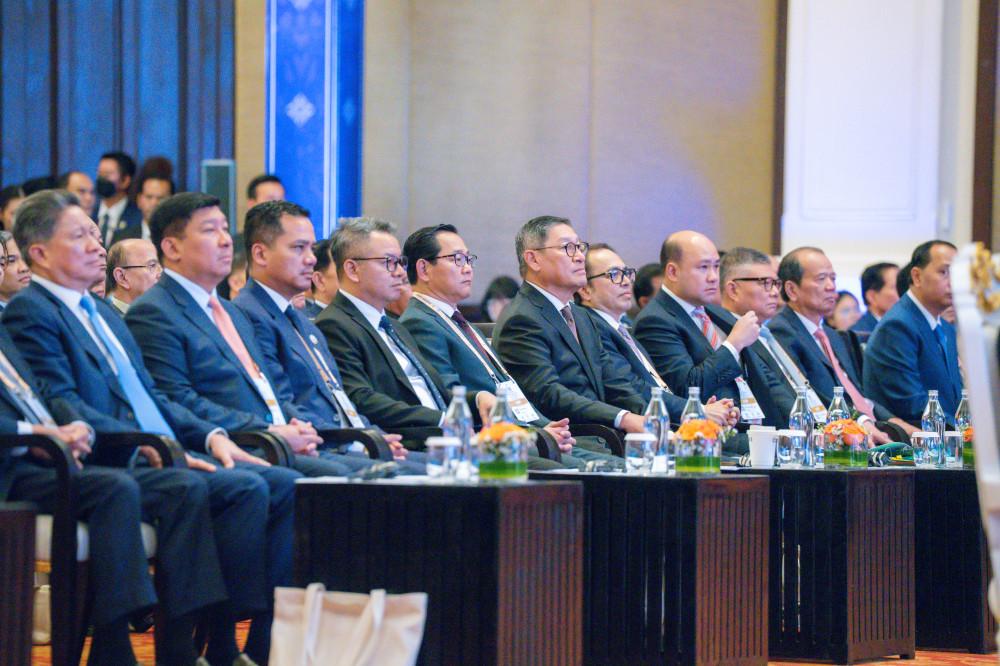
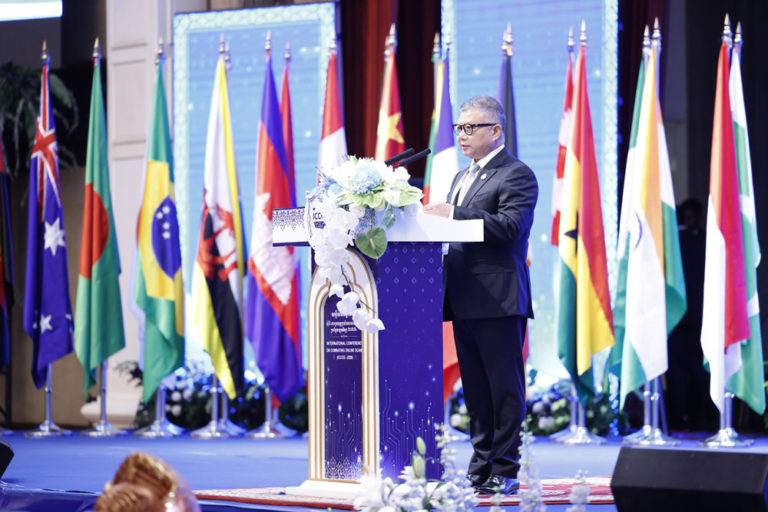
H.E. Santibindit Chhay Sinarith, Senior Minister and Head of the Secretariat of the Commission for Combating Online Scams (CCOS), made the remarks during the International Conference on Combating Online Scams being hosted by the Kingdom of Cambodia in Phnom Penh on Wednesday under the theme “Acting Together Towards Breaking the Chain and Eradication of Online Scams.”
“Cyber scam offences are no longer isolated events, but part of a broader criminal network that often intersects with other crimes, including human trafficking, forced labour, money laundering, and other forms of organised transnational crime,” H.E. Chhay Sinarith said.
“These issues are transnational, rapidly evolving, and beyond the capacity of any single state to address effectively alone.”
He emphasised that Cambodia is not the origin of cyber scams, but rather a target destination chosen by foreign criminal syndicates operating across borders.
“Foreign transnational criminal networks have used Cambodian territory to conduct cyber scams targeting victims abroad, as well as Cambodian citizens,” he said, noting that while the perpetrators hail from various regions, Cambodia suffers the fallout as a victim nation.
The Senior Minister highlighted the severe negative impact of these operations on Cambodia’s national security, public order, tourism, investment, overall economy, and international reputation.
In response to the growing threat, the Royal Government of Cambodia under Prime Minister Samdech Moha Borvor Thipadei Hun Manet initiated and hosted the international conference in collaboration with international partners to demonstrate strong political resolve in eradicating cyber scams without exception or retreat.
H.E. Santibindit Chhay Sinarith also expressed gratitude to international partners for their ongoing cooperation in information sharing, investigative and forensic support, capacity building, and the repatriation of their respective citizens.