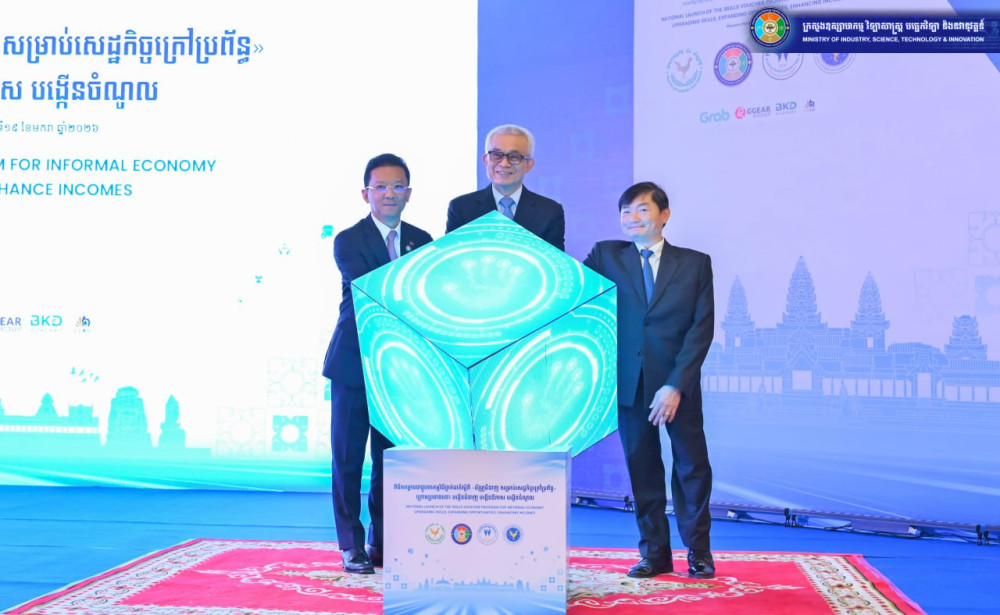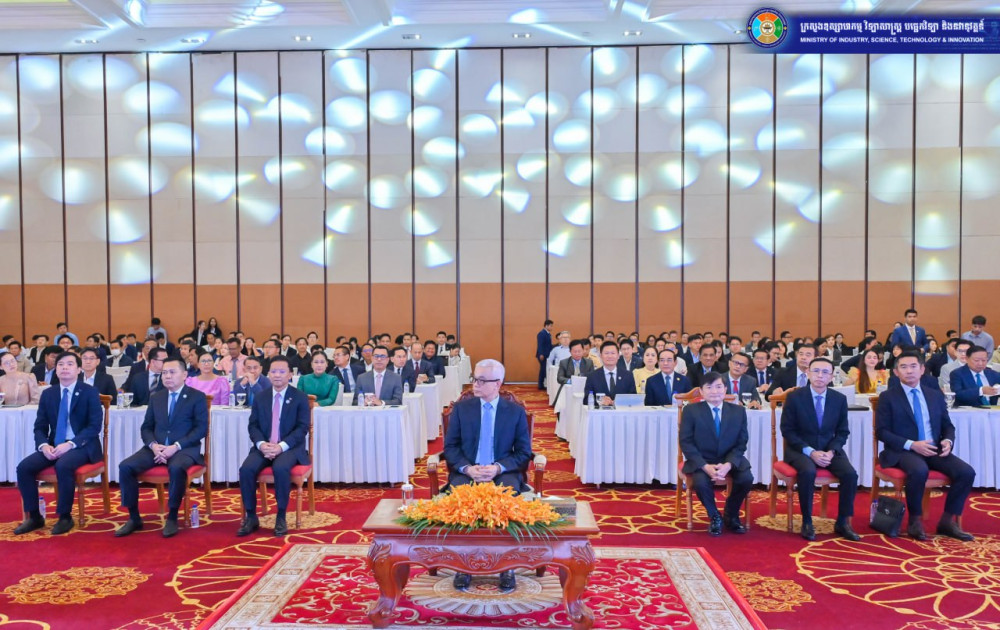
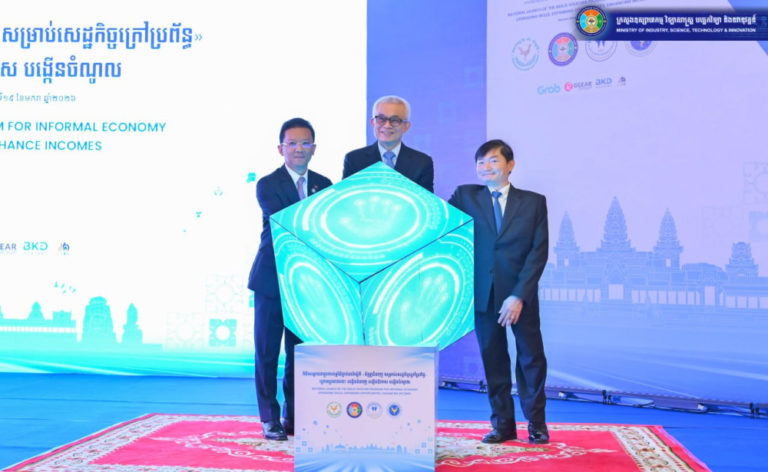
The Royal Government of Cambodia today launched the Skills Voucher Programme, aimed at strengthening skills development, expanding opportunities, and increasing income for the Cambodian workforce, including those in the informal economy.
The launching ceremony was presided over by H.E. Aun Pornmoniroth, Deputy Prime Minister and Minister of Economy and Finance, with the participation of senior government officials, development partners, and private-sector representatives.
Speaking at the ceremony, H.E. Hem Vanndy, Minister of Industry, Science, Technology & Innovation and Chairman of the Coordinating Committee for Informal Economy Development (CCIED), said the programme reflects the government’s strong commitment to inclusive growth.
“Social protection and skills training are strong, interconnected, and complementary foundations for enhancing national economic development, productivity, competitiveness, and the well-being of all citizens,” he said.
The Royal Government of Cambodia has been prioritising efforts to strengthen the capacity of the informal economy and enable its effective integration into sustainable economic development.
“The Skills Voucher Programme will contribute significantly to strengthening and expanding the capacity of informal economy actors, who are mostly self-employed individuals and micro-entrepreneurs, to acquire appropriate skills and have opportunities to transform and integrate into formal businesses,” he said, adding that local production, food processing, and agro-processing require technical and vocational skills to transition and thrive in the formal sector.
Informal economy actors registered on the government’s digital platform will automatically receive an electronic skill voucher valued at 600,000 Riel to pursue skills training at partner institutions of the Skill Development Fund (SDF). The voucher can be redeemed by accessing the SDF website and selecting training courses that best match their skills needs and career objectives.
As of Jan. 16, 2026, the government’s digital platform for onboarding the informal economy had received 274,221 applications, covering self-employed individuals, micro-enterprises, and employees of micro-enterprises and seasonal workers.
Registered participants are now benefiting from a comprehensive and expanding package of support, including tax incentives and relief measures, improved access to financial services, and government services such as the National Social Security Fund and national social protection schemes. Additional support includes digital solutions under the Enterprise Go Digital programme, insurance benefits provided in partnership with the private sector, and the newly launched Skills Voucher Programme, which together aim to strengthen capacity, enhance productivity, and support the gradual integration of informal economy actors into the formal sector.