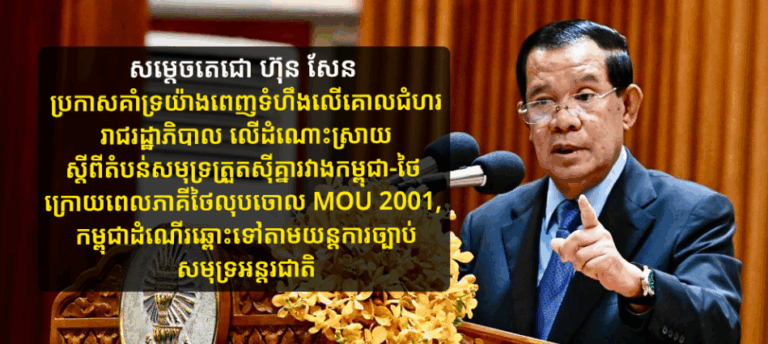
(ភ្នំពេញ)៖ សម្តេចតេជោ ហ៊ុន សែន ប្រមុខរដ្ឋស្តីទីនៃព្រះរាជាណាចក្រកម្ពុជាបានប្រកាសគាំទ្រយ៉ាងពេញទំហឹងលើគោលជំហររារដ្ឋាភិបាល លើដំណោះស្រាយស្តីពីតំបន់ សមុទ្រត្រួតស៉ីគ្នារវាងកម្ពុជា-ថៃ ក្រោយពេលភាគីថៃលុបចោល MOU 2001 ហើយសម្តេចបានបញ្ជាក់ថា កម្ពុជាធ្វើដំណើរទៅកាន់ច្បាប់អន្តរជាតិ សូមកុំចោទប្រកាន់ថា កម្ពុជាធ្វើអន្តរជាតូបនីយកម្មបញ្ហាទ្វេភាគី និងសូមកុំនិយាយថាធ្លាក់ចូលអន្ទាក់កម្ពុជាដែលចង់ឲ្យភាគីទី៣ ឬអន្តរជាតិចូលរួម និងក៏សូមកុំបបួលកម្ពុជារៀបចំ យន្តការទ្វេភាគីថ្មី ជំនួសយន្តការទ្វេភាគីចាស់ដែលថៃលុបចោលជាឯកតោភាគី។
សម្តេចតេជោ ហ៊ុន សែន បានបង្ហាញខ្លឹមសារទាំងស្រុងនៅលើបណ្តាញសង្គមផ្លូវការរបស់សម្តេចនាថ្ងៃទី០៦ ខែឧសភា ឆ្នាំ២០២៦៖
ខ្ញុំសូមគាំទ្រយ៉ាងពេញទំហឹងនៅគោលជំហររាជរដ្ឋាភិបាលលើដំណោះស្រាយស្តីពីតំបន់សមុទ្រត្រួតស៊ីគ្នារវាងកម្ពុជា ថៃ ក្រោយពេលភាគីថៃលុបចោល MOU 2001 ជាឯកតោភាគី។ មិនត្រូវបង្កើតយន្តការទ្វេភាគីជំនួសយន្តការ MOU 2001 នោះឡើយ គឺដំណើរឆ្ពោះទៅតាមយន្តការច្បាប់សមុទ្រឆ្នាំ១៩៨២ តែម្តង ទើបអាចដោះស្រាយដោយមានភាគីទី៣ ចូលរួមរកយុត្តិធម៌ដូចដែលនាយករដ្ឋមន្ត្រី ហ៊ុន ម៉ាណែត បានលើកឡើងកាលពីម្សិលមិញ។
សម្រាប់ខ្ញុំដែលបានធ្វើកិច្ចការនេះតាំងពីអតីតនាយករដ្ឋមន្ត្រី ឆាត ឆៃឈុនហាវ៉ាន់ ឆ្នាំ១៩៨៩ ដល់ ១៩៩០ និងបន្តមកចុះហត្ថលេខាលើ MOU 2001 ខ្ញុំពិតជាសោកស្តាយនូវការលុបចោលជាឯកតោភាគីពីសំណាក់ភាគីថៃ ក្រោមហេតុផល (គ្មានវឌ្ឍនភាព)។
ខ្ញុំគួរតែបំភ្លឺថា គ្មានវឌ្ឍនភាពដោយសារអ្វី? ភាគីថៃខ្លួនឯងដឹងច្បាស់ជាងនរណាទាំងអស់ តើថៃដូរនាយករដ្ឋមន្ត្រីប៉ុន្មានហើយក្រោយរដ្ឋប្រហារទម្លាក់អតីតនាយករដ្ឋមន្ត្រី ថាក់ស៊ីន ស៊ីណាវ៉ាត្រា ឆ្នាំ២០០៦? កម្ពុជាធ្វើដំណើរដោយ នាយករដ្ឋមន្ត្រី ហ៊ុន សែន និងបន្តដោយ នាយករដ្ឋមន្ត្រី ហ៊ុន ម៉ាណែត ដោយគ្មានការផ្លាស់ប្តូរយន្តការ និងខ្លឹមសារចរចា។ ក្នុងពេលជាមួយគ្នាថៃ ផ្លាស់ប្តូនាយករដ្ឋមន្ត្រីប្រមាណ១០នាក់ តើនេះជាហេតុផលមួយនៃការគ្មានវឌ្ឍនភាពទេ?
ខ្ញុំគួរតែបញ្ជាក់បន្ថែមថា ទោះបីថៃមានការផ្លាស់ប្តូនាយករដ្ឋមន្ត្រីច្រើនរូបក៏ដោយ ក៏ថ្នាក់ដឹកនាំទាំងនោះនៅតែបង្ហាញការបន្តចរចា សូម្បីរដ្ឋាភិបាលឯកឧត្តមនាយករដ្ឋមន្ត្រី អាប់ភីស៊ីត វេចាជីវ៉ា ក៏បានចាត់បញ្ជូន ឧបនាយករដ្ឋមន្ត្រី សុថេប ធឿកសុបាន់ និង រដ្ឋមន្ត្រីក្រសួងការពារជាតិ ប្រាវីត វង្សសុវណ្ណ មកជួបចរចាជាមួយខ្ញុំនៅផ្ទះតាខ្មៅ នាឆ្នាំ២០១០ ដែលនៅពេលនោះហើយដែលវរជនទាំងពីរបានស្គាល់សម្លកកូរខ្មែរលើកដំបូងដែលភរិយាខ្ញុំចំអិនផ្ទាល់ដៃ ជូនភ្ញៀវកិត្តិយសទាំង២រូបសម្រាប់អាហារថ្ងៃត្រង់។
កម្ពុជាធ្វើដំណើរទៅកាន់ច្បាប់អន្តរជាតិ សូមកុំចោទប្រកាន់ថាកម្ពុជាធ្វើអន្តរជាតូបនីយកម្មបញ្ហាទ្វេភាគី និងសូមកុំនិយាយថាធ្លាក់ចូលអន្ទាក់កម្ពុជាដែលចង់ឲ្យភាគីទី៣ ឬ
អន្តរជាតិចូលរួមនិងក៏សូមកុំបបួលកម្ពុជារៀបចំយន្តការទ្វេភាគីថ្មី ជំនួសយន្តការទ្វេភាគីចាស់ដែលថៃលុបចោលជាឯកតោភាគី។
សង្ឃឹមថា កម្ពុជានិងថៃនិងដឹកដៃគ្នាទៅកាន់យន្តការអន្តរជាតិ ដែលមានសមត្ថកិច្ចលើបញ្ហាសមុទ្រ៕
I fully support the Royal Government’s position on resolving the overlapping maritime area between Cambodia and Thailand following Thailand’s unilateral cancellation of the MOU 2001. A new bilateral mechanism should not be created to replace the MOU 2001. Instead, the process should move directly toward the mechanisms under the United Nations Convention on the Law of the Sea, where a fair resolution can be achieved with the participation of a third party, as emphasized yesterday by Prime Minister Hun Manet.
For me, having worked on this issue since the time of former Thai Prime Minister Chatichai Choonhavan from 1989 to 1990, and later participating in the signing of the MOU 2001, I deeply regret Thailand’s unilateral decision to cancel the agreement on the grounds of “lack of progress”.
I would like to clarify: what caused the lack of progress? Thailand itself knows better than anyone. How many prime ministers has Thailand had since the 2006 Thai coup d’état that ousted former Prime Minister Thaksin Shinawatra? Cambodia, on the other hand, has maintained continuity under Prime Minister Hun Sen and now under Hun Manet, without changing the negotiation mechanism or substance. Meanwhile, Thailand has changed prime ministers around ten times—could this be one of the reasons for the lack of progress?
I would further emphasize that despite Thailand’s frequent changes in leadership, those leaders still demonstrated a willingness to continue negotiations. For instance, under the government of Prime Minister Abhisit Vejjajiva, Deputy Prime Minister Suthep Thaugsuban and Defense Minister Prawit Wongsuwan were sent to meet with me at my residence in Takhmao in 2010. It was during that visit that both dignitaries experienced Cambodian “Samlor Korko” for the first time, prepared personally by my wife for their lunch.
Cambodia is moving forward based on international law. Please do not accuse Cambodia of “internationalizing” a bilateral issue, nor claim that Cambodia is setting a trap by inviting third-party or international involvement. Likewise, please do not urge Cambodia to establish a new bilateral mechanism to replace the one that Thailand has unilaterally cancelled.
It is my hope that Cambodia and Thailand will join hands in moving toward an appropriate international mechanism with jurisdiction over maritime issues.