Cambodia and the United Nations have expanded technical and vocational training and employment pathways for persons with disabilities and migrant workers returning from Thailand, according to a Royal Government report on Wednesday.
The initiative falls under the third phase of the Decent Employment for Youth in Cambodia (DEY III) programme, which aims to strengthen human capital as the country pursues sustainable socioeconomic development.
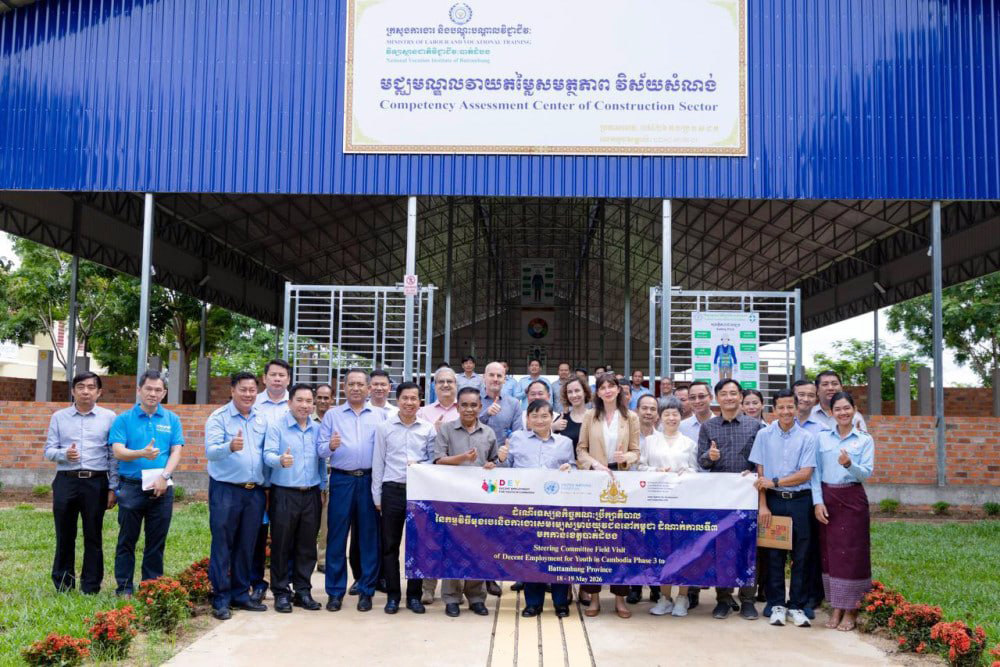
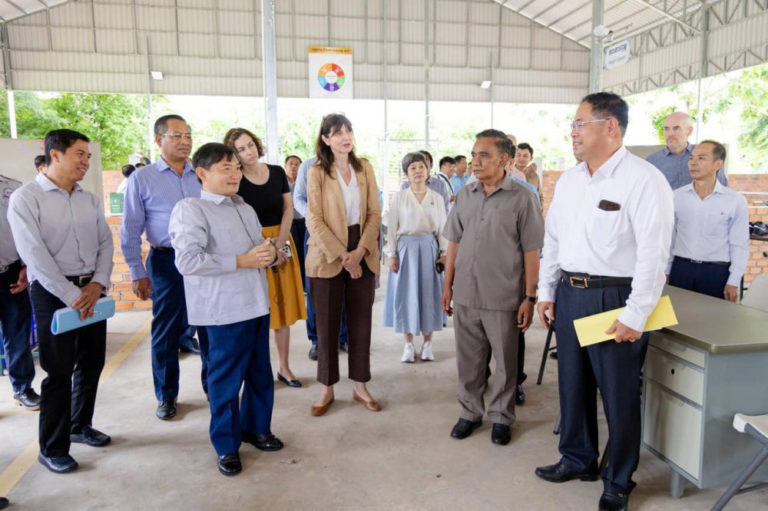
Cambodian Minister of Labour and Vocational Training H.E. Heng Sour and UN Resident Coordinator Ms. Vladanka Andreeva led a high-level delegation on Tuesday to the National Vocational Institute of Battambang. The visit followed assessments of the Recognition of Prior Learning (RPL) and the Basic Education Equivalency Programme (BEEP).
The joint delegation reviewed integration efforts between the National Social Assistance Fund, disability support networks, local administrations, and the Royal Government’s flagship Technical and Vocational Education and Training (TVET) programme, which targets 1.5 million citizens.
H.E. Minister Heng Sour lauded the initiative’s outcomes, noting participants have secured decent employment, higher wages, and nationally certified credentials.
“Under the leadership of Prime Minister Samdech Moha Borvor Thipadei Hun Manet, investing in human resources remains a cornerstone of Royal Government priority,” H.E. Heng Sour said, adding that in the current economic landscape, “jobs and skills are actively seeking out qualified workers.”
To bridge accessibility gaps in remote areas, the Ministry plans to enhance cooperation with village and commune administrations and deploy mobile training units offering practical skills such as fruit processing, hairdressing, and mechanical repairs. The Minister urged unskilled citizens or those lacking steady income to enroll for manufacturing roles with National Social Security Fund (NSSF) benefits.
For her part, UN Resident Coordinator Andreeva expressed satisfaction with the tangible livelihood improvements under the TVET framework. She called for greater inclusivity – urging modifications to curricula and facilities to better accommodate persons with physical disabilities – a focus she pledged to present to the programme’s governing board.
During the visit, Thorn Rithy, who lost mobility after a traffic accident, shared that he recently opened an electrical repair shop following his institutional training.
However, local administrators highlighted ongoing challenges: shortages of academic buildings and student accommodation, a lack of teaching materials, and student dropouts driven by financial hardship. Representatives from the Battambang institute confirmed that direct outreach at the commune level is active to recruit youth from vulnerable families, persons with disabilities, and returning migrants.
The delegation also included representatives from UNESCO, UNICEF, UNIDO, the International Labour Organisation (ILO), and the Swiss Agency for Development and Cooperation (SDC).