
A newly opened overland export route traversing Laos into China is set to dramatically expand market access for Cambodian products, offering major economic breakthroughs for farmers and businesses in the country’s northern and northeastern regions.
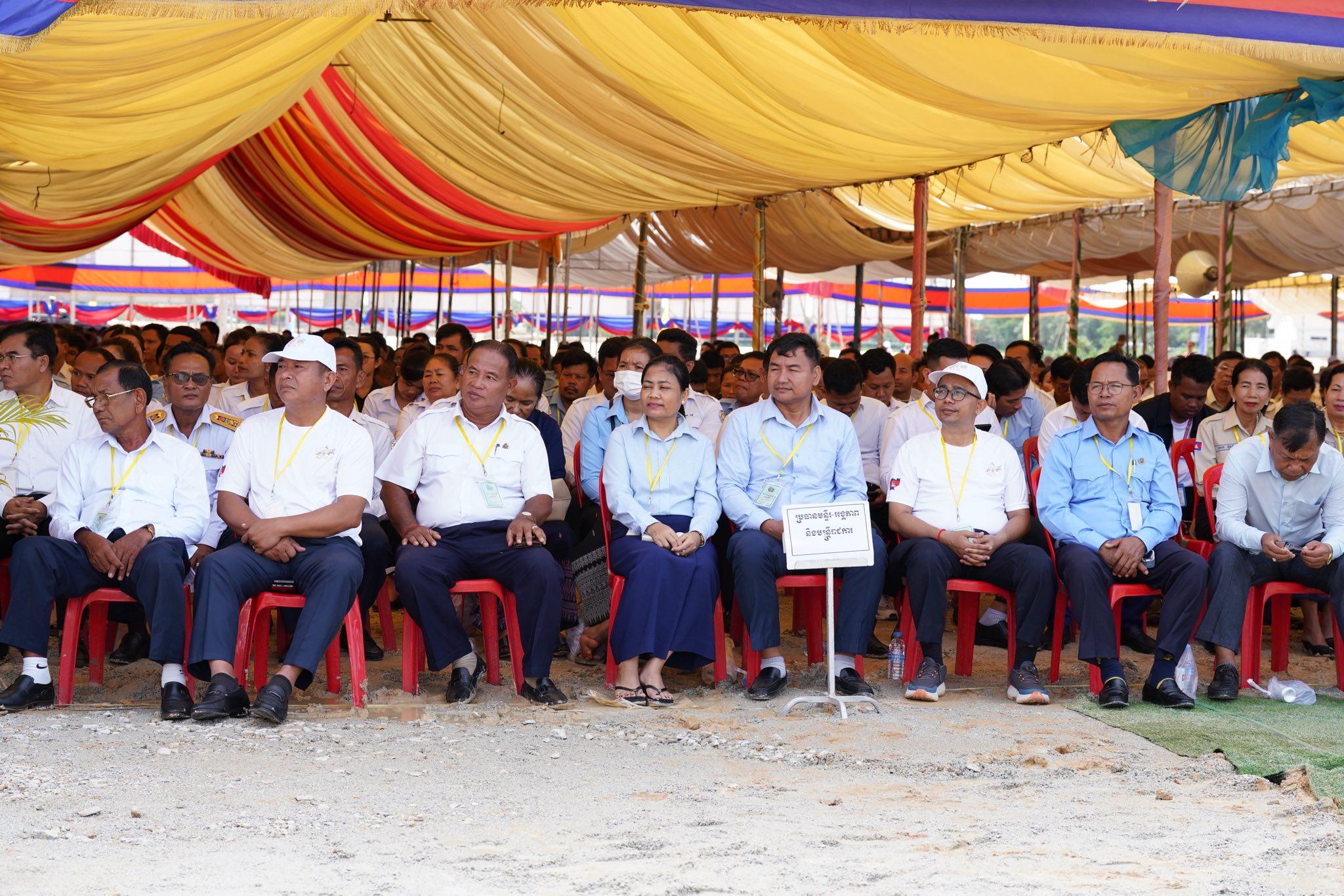
Speaking this morning at the National Fish Day celebration along the Vai Ko River in Svay Rieng province, Prime Minister Samdech Moha Borvor Thipadei Hun Manet hailed the corridor as a transformative trade gateway rather than a simple transit line.
“Opening each new market is never easy,” the Prime Minister emphasized, noting that while negotiations required significant time, the long-term benefits for the public would far outweigh the effort. “Everything we do is for our people, our farmers, and the Cambodian public as a whole.”
Historically, Cambodia has relied almost exclusively on maritime and air transport to move goods to China.
The introduction of this overland alternative marks a strategic shift in regional logistics, spearheaded by extensive bilateral cooperation.
H.E. Khim Finan, Spokesperson for the Ministry of Agriculture, Forestry and Fisheries, confirmed that the agricultural transit route was officially launched during a ceremony in Vientiane on June 22. The milestone follows intense negotiations aimed at streamlining customs, clearing administrative hurdles, and aligning cross-border transit procedures between Cambodia’s Ministry of Agriculture and Laos’ Ministry of Agriculture and Environment.
Under the newly finalized agreement, six core Cambodian agricultural products have been approved for immediate overland transit through Laos to China: Bananas, Mangoes, Rice, Pailin longan, Cassava, and Durian.
The opening of this corridor comes at a high-growth period for bilateral trade. Cambodia exported more than US$753 million worth of goods to China in the first five months of 2026 alone, solidifying China’s position as one of the Kingdom’s primary export destinations.
Ministry officials and trade experts view the overland route as a vital mechanism to reduce shipping times, lower logistics costs, and strengthen the international market presence of Cambodian agricultural enterprises.