Cambodia has highlighted its significant achievements in mine action while expressing deep concern over the humanitarian impact of recent border conflicts and the use of cluster munitions.
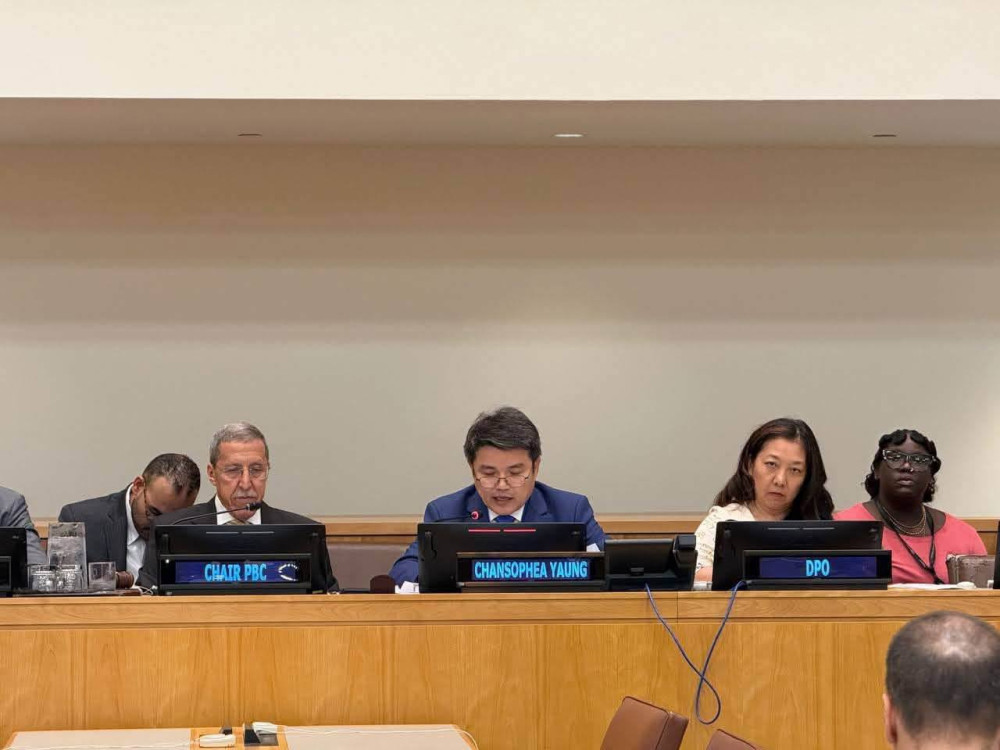
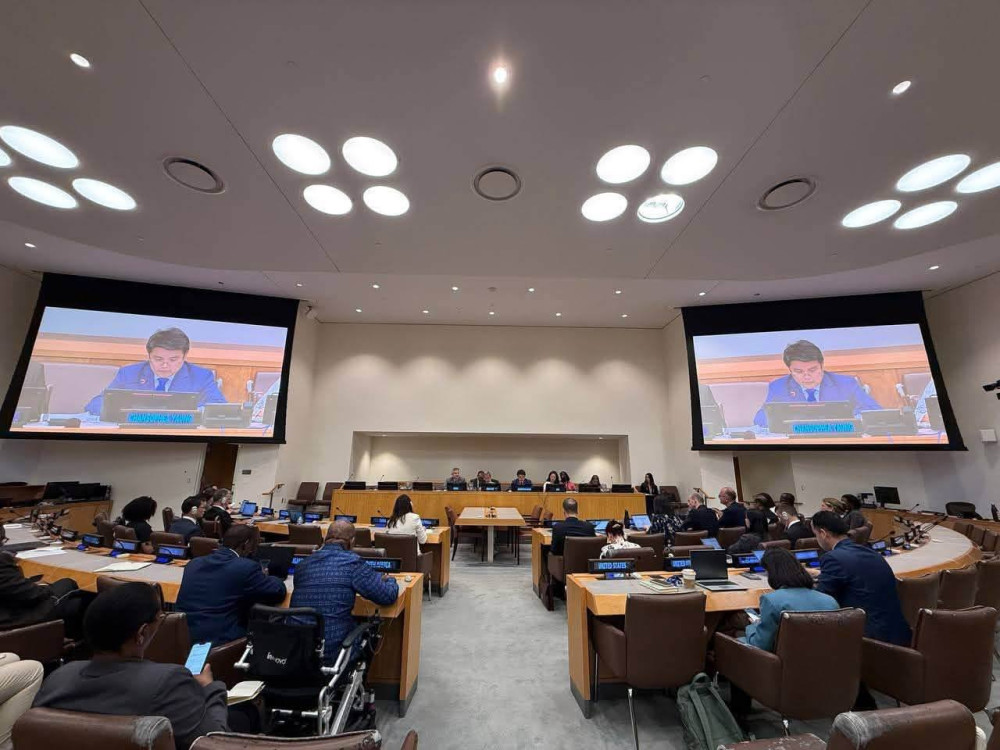
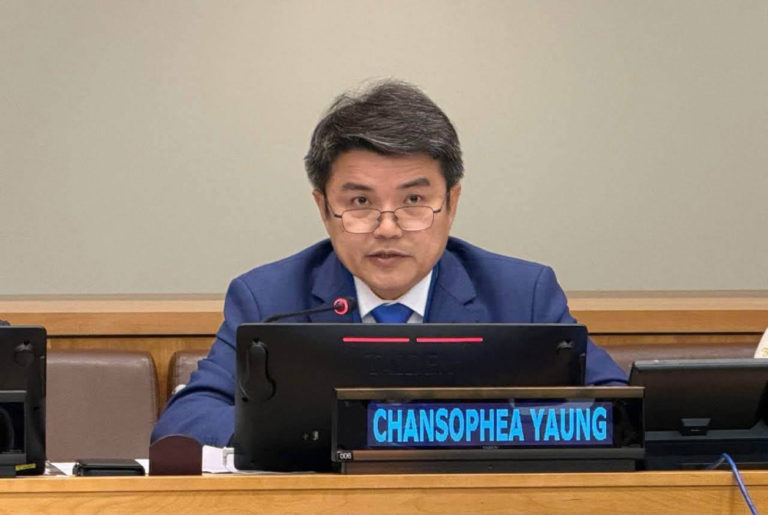
Speaking at the UN Peacebuilding Commission’s meeting on “Mine Action as an Enabler of Peacebuilding, Transitional Justice, Reconciliation and Recovery: Lessons from Colombia and Cambodia” at UN Headquarters in New York on July 29, H.E. Yaung Chansophea, Chargé d’Affaires a.i. of the Permanent Mission of Cambodia to the United Nations, underscored that, as a post-conflict country contaminated by landmines, Cambodia considers mine action not merely a humanitarian and security issue, but also an investment in building and sustaining peace.
H.E. Yaung Chansophea briefed the meeting on Cambodia’s practical experience and concrete achievements in mine action, highlighting the clearance of 3,598 square kilometres of land contaminated by unexploded ordnance, including 2,586 square kilometres contaminated by anti-personnel mines.
He also highlighted Cambodia’s contribution to global peace and security through the deployment of nearly 10,000 peacekeepers, including demining specialists, to UN peacekeeping missions since 2006, as well as its successful hosting of the Siem Reap-Angkor Summit on a Mine-Free World.
Reaffirming Cambodia’s commitment to clearing all known mine-contaminated areas by 2030, guided by the National Mine Action Policy 2026-2035, H.E. Yaung Chansophea expressed deep concern over the humanitarian consequences of recent border conflicts and the reported use of cluster munitions by the opposing side.
He stressed that such developments could have long-term humanitarian consequences and place additional pressure on Cambodia’s mine action efforts, particularly in the areas of survey, clearance and assistance to victims.