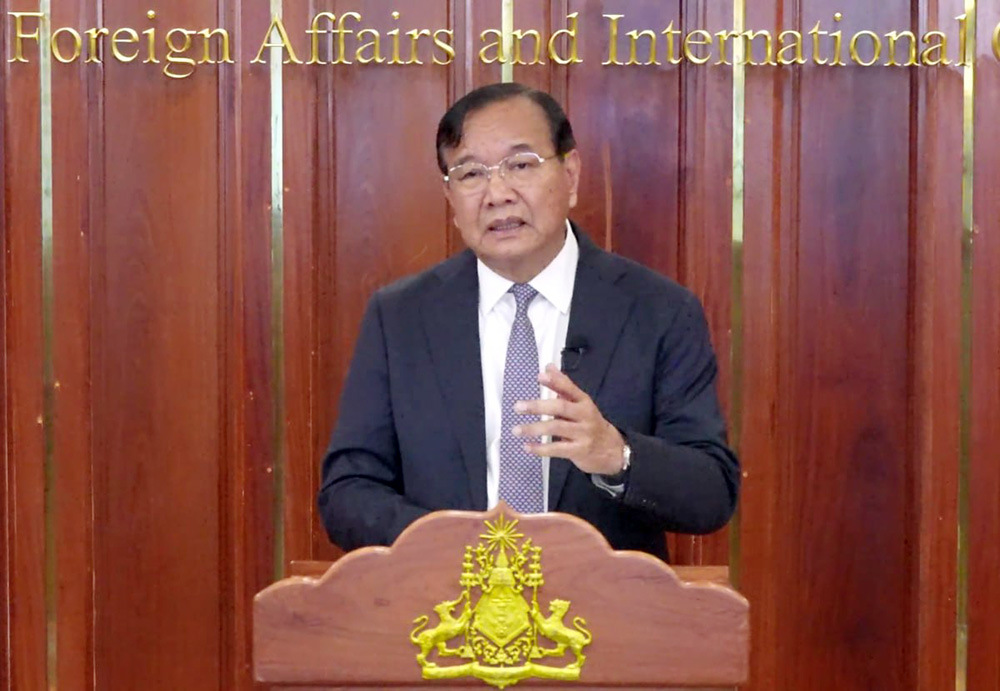
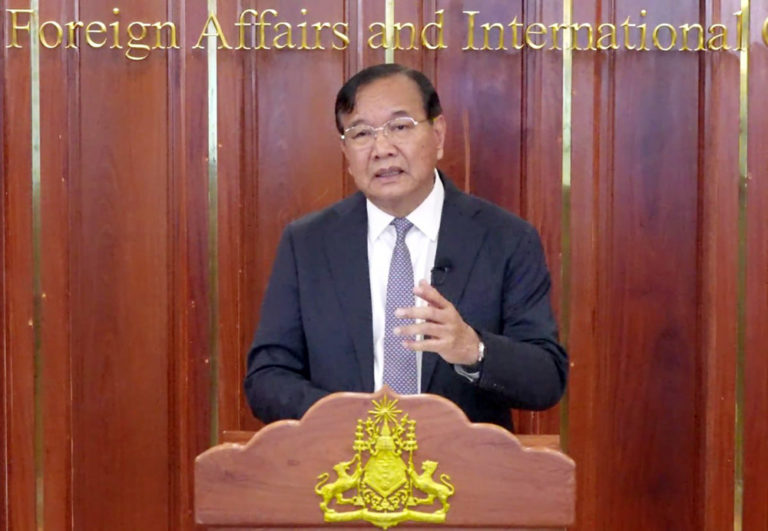
Cambodia is set to assume the presidency of the Francophonie Summit from France for a two-year term next week, marking a new chapter in its engagement with the Francophone community, Deputy Prime Minister and Minister of Foreign Affairs and International Cooperation H.E. Prak Sokhonn said in a special interview released today.
H.E. Prak Sokhonn said Cambodia would assume the presidency during the 20th Francophonie Summit, scheduled to take place in Phnom Penh on Nov. 15-16, 2026.
He described the occasion as an opportunity for Cambodia to contribute to shaping the future direction of the Francophone community and strengthen its role within the organisation.
The Deputy Prime Minister emphasised that Cambodia’s forthcoming presidency would focus on making the Francophonie a more dynamic, effective and action-oriented organisation capable of delivering tangible benefits to its member states and peoples.
Originally established to promote cooperation in the French language and culture, the International Organisation of La Francophonie (OIF) has significantly expanded its role over the years to encompass political, economic, educational, research and other areas of international cooperation.
Under Cambodia’s leadership, particular attention will be given to advancing the organisation’s four fundamental pillars: promoting the French language and cultural and linguistic diversity; strengthening peace, democracy and human rights; supporting education, training and research; and creating favourable conditions for sustainable economic development and shared prosperity, he said.
On the political front, Cambodia will seek to strengthen the OIF’s role as a platform for dialogue, diplomatic engagement and cooperation among member states, contributing to conflict prevention, peacebuilding and international stability.
In the economic sphere, the Kingdom aims to foster closer cooperation among Francophone countries, promote sustainable development and expand opportunities for shared prosperity. It will also encourage greater cooperation in education, vocational training and research to develop human resources and narrow capacity gaps among member states.
The Deputy Prime Minister underscored the importance of placing young people and women at the centre of the organisation’s future agenda, while giving greater attention to digital technology, which he described as essential to preparing Francophone societies for emerging opportunities and challenges.
He further stressed that Cambodia’s vision was to transform the Francophonie from a community primarily connected through a shared language and cultural values into a more active network built on practical cooperation, solidarity and concrete achievements.
The ultimate objective is to make the OIF more responsive to the actual needs of its members and closer to ordinary people, ensuring that cooperation translates into meaningful benefits for communities across the Francophone world.
The OIF was established on Mar. 20, 1970, in Niamey, Niger, under the name Agency for Cultural and Technical Cooperation (ACCT). Cambodia is among its founding members, although the Kingdom officially joined the organisation in 1993.
The organisation currently comprises 90 member states and governments, including 53 full members, five associate members and 32 observers.