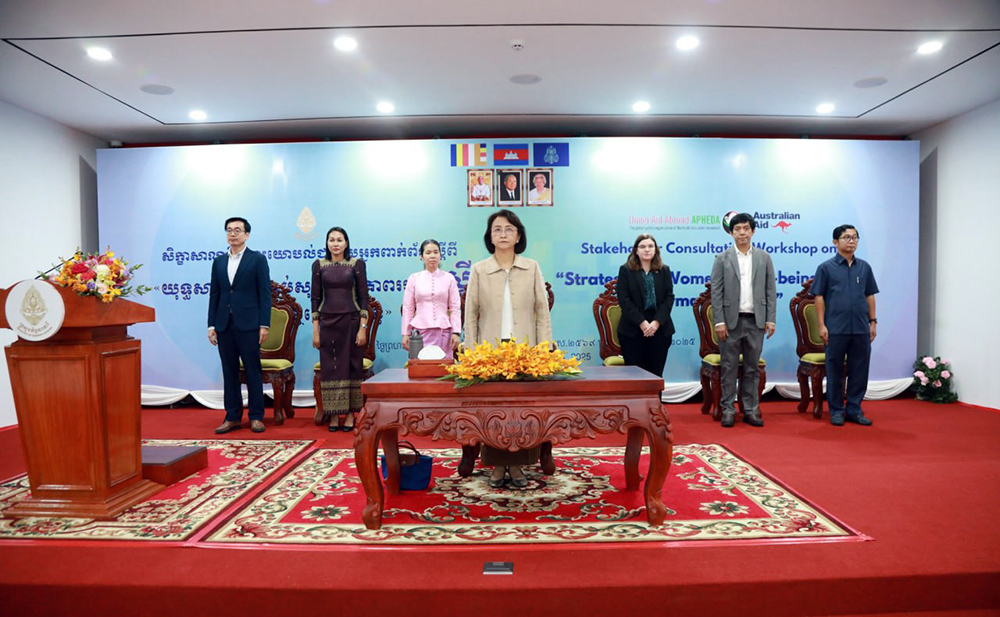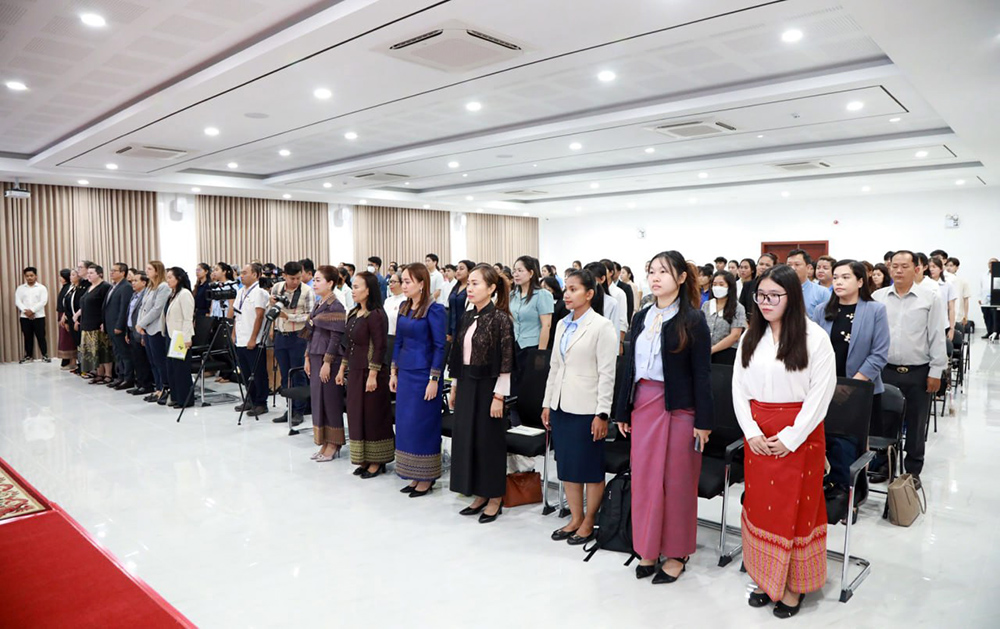
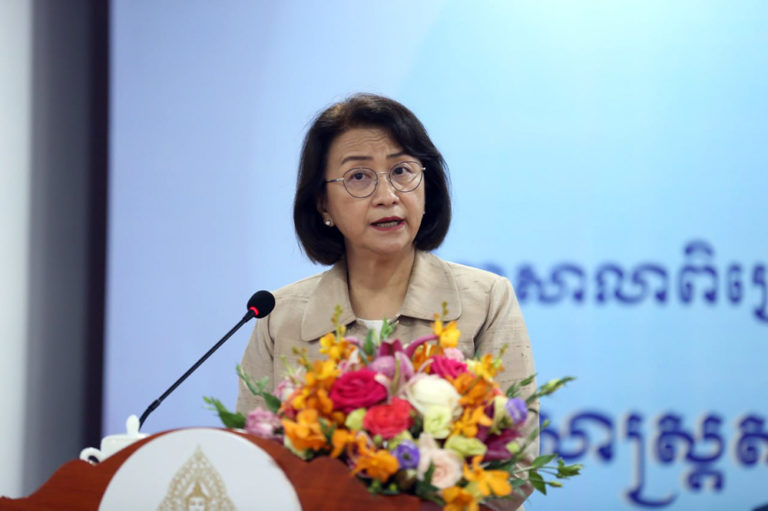
A Stakeholder Consultation Workshop on the “Strategy for Women’s Well-being in the Informal Economy” was held in Phnom Penh on Dec. 4 to strengthen understanding of the challenges and needs faced by women working in the informal sector.
H.E. Dr. Ing Kantha Phavi, Minister of Women’s Affairs, presided over the workshop, which brought together Ms. Kirsty Harris, Head of Development Cooperation at the Australian Embassy in Cambodia, along with leaders and officials from relevant ministries and institutions, national and international organisations, students, and representatives from the private sector.
Organised by the Women’s Economic Empowerment & Entrepreneurship Development Centre (WEE-DC) of the Ministry of Women’s Affairs, with collaboration with APHEDA (Australian People for Health, Education and Development Abroad), this consultation workshop aims to enhance understanding of the challenges and needs of women working in the informal economy, to review existing policies, regulations, and interventions, to develop strategies and responsive actions, and to promote collaboration among relevant stakeholders, ensuring that ongoing efforts effectively address these challenges and respond efficiently to the needs of women in this sector.
On the occasion, H.E. Minister emphasised that improving the well-being and capabilities of women in the informal economy is a strategic and multi-purpose solution: Breaking the Cycle of Poverty, Unlocking the potential of “National Productivity and Human Capital”, Strengthening “Public Health and Resilience”.
These factors require all actors, including the government, national and international organisations, relevant partners, and the private sector, to participate, support, and complement each other to accelerate the pace of achieving the Royal Government’s vision of graduating from Least Developed Country (LDC) status in 2029 and to build the foundation towards achieving Cambodia’s vision of becoming a high-income country by 2050, the minister added.