Cambodia on Friday marked three months since a ceasefire along its border with Thailand came into effect at noon on Dec. 27, 2025, a Royal Government spokesperson said, underscoring Cambodia’s continued commitment to peace and diplomacy.
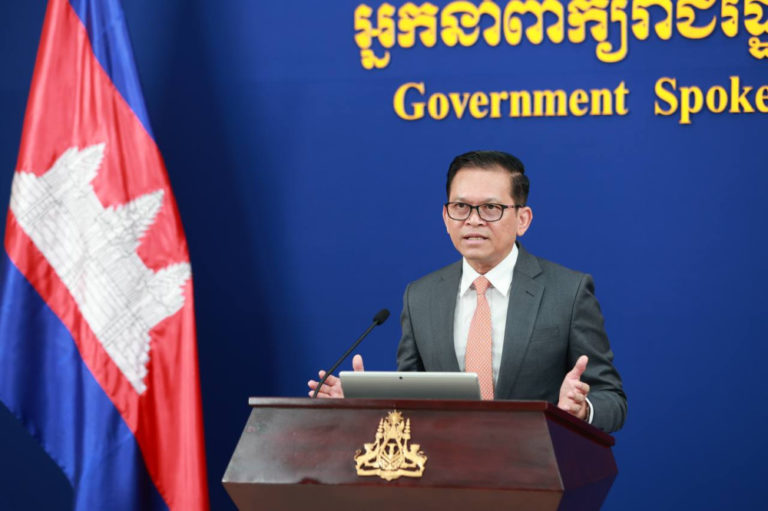
Speaking at a press briefing on the latest developments along the Cambodia–Thailand border, Royal Government Spokesperson H.E. Pen Bona said the ceasefire – reached through intensive diplomatic efforts by Cambodian leaders with support from international partners, including the United States, China and the Association of Southeast Asian Nations (ASEAN) – has held for a full three months.
Prime Minister Samdech Moha Borvor Thipadei Hun Manet had earlier stressed that the agreement reflects Cambodia’s steadfast pursuit of peace and its prioritisation of the lives and well-being of its people, the spokesperson said. At the same time, Cambodia maintains its full right to address border issues with Thailand in accordance with treaties, conventions and international law through existing bilateral mechanisms.
Senate and the ruling Cambodian People’s Party President Samdech Akka Moha Sena Padei Techo Hun Sen also reaffirmed that while Cambodia remains firmly on a path of peace, it will not compromise its territorial integrity or national dignity.
The ceasefire forms part of a Joint Statement issued on Dec. 27 following a special meeting of the General Border Committee (GBC), which included the ceasefire accord and 15 additional points aimed at de-escalation. Cambodian officials described the agreement as a critical step to prevent further casualties, bloodshed and humanitarian suffering.
Cambodia has adhered strictly to the ceasefire and related agreements, including an earlier joint statement reached in Kuala Lumpur on Oct. 26, 2025, with the overarching goal of resolving border disputes peacefully through diplomatic and technical channels in line with international law.
Under the framework of the agreement, 18 Cambodian soldiers were released and returned home on Dec. 31, 2025. More than 94 percent of over 640,000 displaced civilians have since gone back to their homes, although about 36,000 remain unable to return, the spokesperson said, citing obstructions by Thai armed forces, including barriers and damage to property.
Cambodia has repeatedly lodged strong protests against actions it says alter the security environment in or around civilian areas and create new facts on the ground. It has also urged Thailand to implement key provisions of the Joint Statement, including accelerating joint boundary demarcation work and prioritising areas inhabited by civilians to enable the safe and dignified return of displaced persons.
Since the ceasefire took effect, Cambodia’s State Secretariat of Border Affairs has sent five diplomatic notes to Thailand proposing the deployment of joint survey teams to continue demarcation work in several sectors, including areas in Banteay Meanchey, Battambang and Pursat provinces, as well as the reconstruction of 15 border markers based on original French-era models.
The Royal Government reiterated its firm commitment to upholding the ceasefire and all related agreements while safeguarding the Cambodia-Thailand international boundary in accordance with international law, including the principle of uti possidetis juris and relevant Franco-Siamese treaties, maps and demarcation records.
Cambodia does not recognise any unilateral changes to the border resulting from the use of force, the spokesperson reiterated.